

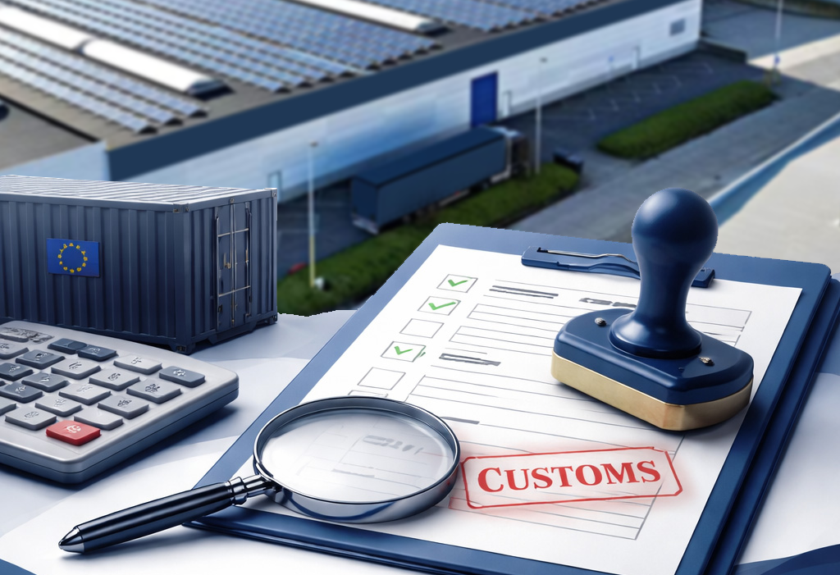
A practical guide to bonded storage in the EU — how it works, who it’s for, and why it matters for your import flow.
When goods arrive in the European Union from a non-EU country, customs duties and VAT are normally due immediately. For many importers, that means paying significant taxes on stock that hasn’t been sold yet — sometimes months before a single unit reaches a buyer.
Bonded warehousing changes that equation.
Bonded warehousing, explained
A bonded warehouse is a storage facility authorised and supervised by customs authorities. Goods imported from outside the EU can be stored there without triggering import duties or VAT. Those charges only become payable when the goods leave the warehouse and enter free circulation — meaning they’re officially released onto the EU market.
Until that point, the stock sits under customs control. It’s physically in Europe, available for distribution, but fiscally it hasn’t “arrived” yet.
This is not a loophole. It’s a formal customs procedure under the EU Union Customs Code (Articles 240–249), designed to support international trade flows and give importers more control over when and how they pay.
How does bonded warehousing work in practice?
The process follows a clear sequence:
Arrival. Goods arrive at an EU port or border — for example, at the Port of Antwerp-Bruges. They’re moved to the bonded warehouse under a transit document (T1), without customs clearance at the border.
Storage under bond. The goods are stored under customs supervision. No duties or VAT are due. The importer retains ownership and can manage stock, plan distribution, or wait for confirmed orders.
Release into free circulation. When the goods are sold or need to be delivered within the EU, they’re customs-cleared in batches — not all at once. Duties and VAT are paid only on what’s released.
Re-export without duties. If the goods are shipped to a destination outside the EU, they leave the bonded warehouse without any EU import duties or VAT ever being paid.
This flexibility is the core advantage: you control when goods enter the market, and you only pay duties when it makes commercial sense.
Who uses bonded warehousing?
Bonded storage is relevant across a wide range of industries and trade flows. The common thread is goods crossing into the EU from outside — whether from the UK, the US, Asia, or anywhere else.
Typical users include importers holding stock for gradual EU distribution, non-EU brands building a European stock position without clearing everything upfront, e-commerce companies fulfilling orders across multiple EU markets from a single bonded location, and businesses that re-export part of their inventory to non-EU destinations and want to avoid paying duties on goods that never enter the EU market.
It’s also used by companies with seasonal demand patterns, high-value goods, or slower-moving inventory — anywhere the cost of paying duties months before a sale creates unnecessary cash pressure.
What can and can’t you do in a bonded warehouse?
While goods are under bond, certain operations are permitted. These typically include sorting, repacking, relabelling, quality inspection, and inventory management — subject to the specific customs authorisation of the warehouse.
What you can’t do is fundamentally transform the goods. Manufacturing, assembly, and production processes generally require a different customs procedure (such as inward processing). The bonded warehouse is designed for storage and handling, not production.
Bonded warehousing by Antwerp-Bruges
Location matters. A bonded warehouse close to a major port shortens the chain between vessel arrival and controlled storage — reducing transit costs and time.
Middlegate operates bonded warehousing at Zeebrugge, within the Port of Antwerp-Bruges. Goods arriving by short sea, deep sea, or container vessel can move directly into bonded storage with customs, transport, and warehouse management handled under one operation.
That means fewer handovers, tighter stock control, and a faster path from port to shelf — whether the destination is Belgium, the Netherlands, Germany, France, or the UK.
Why it matters commercially
Bonded warehousing is not just a customs formality. It’s a commercial tool.
It protects cash flow by deferring duties and VAT until goods are actually sold. It gives flexibility on destination — goods can go to EU buyers, UK buyers, or non-EU markets without locking in a customs decision too early. And it reduces the risk of overpaying duties on stock that ends up being re-exported.
For companies managing cross-border flows into and through Europe, bonded warehousing is one of the most practical ways to keep costs down and options open.
Need bonded warehousing by Antwerp-Bruges? Middlegate manages bonded storage, customs clearance, and EU/UK distribution under one operation. Request a quote or discuss your flow with our team.
Need warehousing or logistics support?
Get a tailored quote for bonded warehousing, fulfilment, or transport from our Zeebrugge hub.
Request a Quote



 English